Showing posts with label Real Estate. Show all posts

Sunday, 14 March 2021

Find out how to buy luxury apartments in Dehradun which will meet all of your requirements

Real estate has proved to be a safe investment. Over the years the value of land and property has just kept on increasing. Though the industry has seen some spells when the values drop but has recovered from them very quickly and continued on its growth trajectory. The recent trend among Indians has been to buy property in various destinations across India and not just in the metropolitan cities. The reasons for this is that many Indians are now either looking at investing in a house in smaller cities or holiday destinations that will serve as a retreat for themselves or even shift from the metropolitan cities to these smaller cities which are serving as alternatives to the more popular cities. The rapid development that has been witnessed in India over the last few years has led to more development in these smaller cities and they have become more attractive for people to live in. These cities now are equipped with all the facilities that were once only exclusive to the metropolitan cities and have emerged as a very viable alternative to metropolitan cities. One of the most attractive places in Uttar Pradesh for buying property and settling down has been Dehradun. Many people are interested to buy luxury apartments in Dehradun.


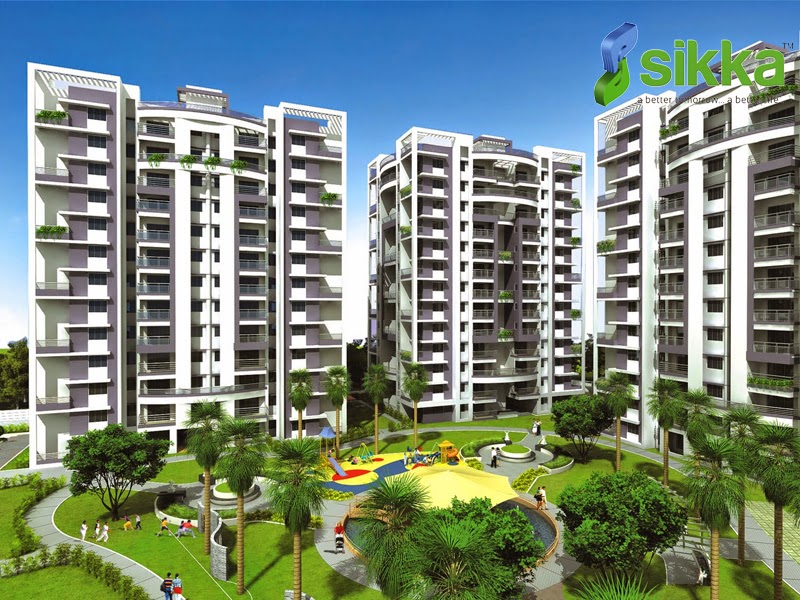
Dehradun is the winter capital of the country. It is located in the foothills of the Himalayan mountain range in Doon valley. The city lies between the Ganges and the Yamuna and has amazing scenic beauty. Dehradun has one of the most pleasant climates. It stays very cool and pleasant during the summers and is cold during the winters but does not generally have any snowfall. This pleasant weather makes the city very attractive for people to live in. The city is very well connected to different nearby hill stations such as Mussoorie, Uttarkashi, Dhanaulti and other places. Places of pilgrimage such as Rishikesh and Haridwar are also located near Dehradun. This proximity and good connectivity allow the residents of Dehradun to plan quick trips to these nearby tourist destinations. Some of the premier educational institutes and schools are also located in Dehradun which makes it very easy for parents to choose a good school for their children. According to some surveys that have been done, Dehradun is one of the safest cities in India which has led to an increase in the number of people wanting to buy luxury apartments in Dehradun. There are many residential projects to choose from in Dehradun but the best residential project in Dehradun is the Sikka Kingston Greens. This project is centrally located and has all of the facilities that the residents might require. From spacious flats to themed gardens to many recreational facilities, this residential project has got it all.

The Sikka Kingston Greens provides its residents with a premium living space along with many luxurious facilities that have made it the best residential project in Dehradun. If you want scenic flats with top quality facilities the Sikka Kingston Greens is the residential project for you.


Friday, 26 December 2014

Real estate firms may raise funds via IPO route

After a long time, real estate companies could hit the fund-raising trail. The reason is improvement in investor sentiment.

According to Pankaj Jaju, group head, strategic corporate group, Axis Bank, some that wanted to float public issues in 2011-12 but did not proceed might look at tapping the equity markets in six to nine months. The Mumbai-based Lodha group, Delhi-based Emaar MGF, Neptune group and Hindustan Construction’s Lavasa Corp were among those planning to float Initial Public Offerings (IPOs) three to four years earlier but did not.


“Around Rs 20,000 crore of IPOs were planned in 2011-12. Some will want to tap the markets now,” Jaju said at a real estate conclave organised here on Friday by the Confederation of Indian Industry. “In six months, realty stocks have gone up 60 per cent.”

According to Bloomberg, Lavasa Corp plans to float an IPO this financial year. Axis Bank and Kotak Mahindra Capital are working on it, the agency said, adding the company planned to file a draft prospectus next month to the capital markets regulator Securities and Exchange Board of India. Lavasa had planned to raise Rs 2,000 crore in 2010, Bloomberg said.

Nayan Bheda, managing director, Neptune group, said: “Not now. We will look at an IPO in some time. The gestation period in real estate is taking longer and it could pose a challenge in declaring quarterly results.”

According to sources, listed companies DLF, Phoenix Mills and others such as the Embassy-Blackstone combine could come out with real estate investment trusts and list these if the government gives them tax concessions.

Monday, 8 December 2014

Real Estate: Why India can build hope

The real estate sector may be hung over from a two-year downturn, but developers say that one thing never changes: The right product at the right ticket size always sells.

Real estate developers had hoped that the election of a stable government would boost their fortunes. It’s been six months since the Narendra Modi-led NDA has come to power, but there has been no noticeable change in demand. Unsold inventory continues to pile up across the country. High interest rates and a sluggish sub-5 percent GDP growth in FY14 have resulted in people holding on to their purse strings. The fallout is that real estate prices have barely budged over the last two years. But sentiment is picking up, and cities like Bangalore have developed a vibrant and healthy real estate market. 


As part of the fifth session of the ‘Forbes India CEO Dialogues: The Leadership Agenda’, industry leaders shared their views on the steps needed to revive the sector. Boman Irani, chairman and managing director of Rustomjee Group, Subodh Runwal, director, Runwal Group, Khushru Jijina, managing director of Piramal Fund Management, Ashish Puravankara, joint managing director of Puravankara Group and Sunil Kaushal, chief executive officer of India and South Asia at Standard Chartered, discussed a roadmap to get the sector growing again. 

Developers on the panel believed that there would be an uptick in prices within six months, once there is a correction of interest rates. Financiers, however, said that this is at least 12-18 months away. 

Excerpts from a discussion moderated by R Jagannathan, editor-in-chief, Forbes India.

R Jagannathan: We have certainly seen a turnaround in sentiment. Is that percolating down to the real estate sector?
Boman Irani: Yes. People have started noticing that there is a strong government, which has made all the right noises. The government started with something as simple as the ‘Swachh Bharat Abhiyan’ (Clean India Campaign) and then made a grand announcement promising homes for all by 2022. People feel good about these measures. Emotion is what drives purchase, and real estate is driven by a desire to improve one’s lifestyle. The fact that everyone is hoping that the GDP will improve and interest rates will come down is adding a lot of positivity on the ground.

The flipside is that our industry has a lot of pundits and they like to make tall statements, often crying foul about prices being too high. This brings down public sentiment. They have still not started making the right noises. For the end user, any time is the best time to buy, provided he finds what he is looking for in his budget. 

Jagannathan: Bangalore is driven more by fundamental demand and less by investors, unlike, say, Mumbai. Do you see any change in demand?
Ashish Puravankara: Bangalore has been quite stable for the last 2-3 years. One distinct change that we have noticed is that pre-sales have seen a very good response. Earlier, we would sell 10-15 percent when we launched a project. Now we are selling 40-50 percent in the first three months of a launch, and these are at good prices. The end-user demand is very strong. People who come to the city because of their jobs end up staying back. Hence, there is a lot of demand.

Jagannathan: Mumbai is a different market from Bangalore in that there are a lot of speculative investments. With that in mind, do you think Mumbai would take longer to revive than Bangalore or Chennai?
Subodh Runwal: If you look at Mumbai from a 30-year horizon, you’ll see that real estate has outperformed all asset classes. What we are witnessing now is a temporary blip, but if you look at a good developer, you will see that his projects are still selling out quickly. Recently we had people queuing up at 5.30 am for a project we launched.

Source: Forbes India


Wednesday, 26 November 2014

Global firms in talks to invest in Indian real estate

Property and equity firms from Malaysia, Singapore and other Asian countries are weighing the Indian real estate market, following the Centre’s move to relax foreign investment norms in the sector.

Recently, the government had relaxed norms for foreign direct investment (FDI) into the sector, including a cut in the minimum built-up area required to 20,000 sq m from 50,000 sq m; the initial capital required was halved to $5 million. According to norms, 100 per cent FDI is allowed in real estate projects.


Many developers have started discussions with foreign firms for possible ventures, according to two independent consultants tracking this segment. “But the deals are likely to be struck only after 6-12 months; FDI won’t start coming in immediately,” said one of the consultants.

The chief executive of a leading developer based in Gurgaon confirmed his company was talking to many foreign investors for launching few projects. “We have received a few proposals and we are evaluating those. Our only concern is foreign investors want fixed returns over a period of time, which might be difficult, considering the situation of the realty market,” he said, on condition of anonymity.

Experts say the real estate sector is sitting on a huge pile of inventory, adding with low sales and a cash crunch, the FDI relaxation has come at the right time. CBRE’s South Asia chairman and managing director, Anshuman Magazine, said, “The real estate and infrastructure sector is starved of funds. This announcement will widen the base of investors, especially mid-sized financial institutions. It will also encourage new development projects in prime areas of large cities and tier-II towns.” Anuj Puri, chairman and country head, real estate consultancy firm JLL, said, “The government’s decision to relax FDI rules in the construction sector comes in the nick of time for Indian real estate. Meanwhile, developers continue to reel under high levels of debt, even as the channels of funding have shrunk. The easier rules will aid the completion of projects, delayed by a squeeze on funds due to elevated debt levels.”

During 2000-2013, India’s realty sector had received FDI of about $22 billion, 11 per cent of the total FDI into the country during the period. But following a slowdown, foreign investment in the sector has slowed — from $3.1 billion in 2011-12 to $1.3 billion in 2012-13 and $1.2 billion in 2013-14. During April-August this year, $446 million has flowed into the sector. Projects that commit at least 30 per cent of the total cost for low-cost affordable housing will be exempted from the minimum built-up area and capitalization requirements, with a three-year lock-in period. According to the revised norms, projects with at least 60 per cent of the floor area ratio/floor space index for units of carpet area not exceeding 60 sq m will be considered affordable housing projects.

Also, 35 per cent of the total number of units should be constructed for the economically weaker sections, with a carpet area of 21-27 sq m.

Source: Business Standard


Thursday, 6 November 2014

Is India’s urban housing a bubble?

India's relaxed rules for foreign direct investment (FDI) in construction will make it easier for foreigners to invest in real estate. While the move has surely been cheered by the real estate sector, for it will bring in much needed capital for those steeped in debt, it could bring more pain for home buyers. Reason: more foreign money in realty means higher property prices. Simple demand-supply logic.

Current urban realty prices represent affordability for a microscopic few, while the average home buyer will have to exchange 20-30 years of future earnings to afford a house.


Under earlier rules, the government allowed 100 percent FDI in real estate development but with strict riders, including a lock-in period of three years during which the investment cannot be repatriated. Under the new rules, the minimum built area for projects in which foreign investment is allowed will be reduced to 20,000 square metres from 50,000, the government said in a statement late on Wednesday. For "serviced plots", there is no minimum land requirement now, compared to 10 hectares earlier, while the minimum capital investment by foreign companies has been cut to $5 million from $10 million.

"The announcement literally comes in the nick of time for Indian real estate. Construction, housing and real estate segment's share in total FDI had further slipped from 5 percent in the previous year to under 3 percent as of the current fiscal until August. In fact, its share has been consistently falling over the last six years since 2009-10, when it stood at over 20 percent. Meanwhile, developers continue to reel under high levels of debt, even as the channels of funding have shrunk. The easier rules will help faster completion of projects delayed by a squeeze on funds due to elevated debt levels," said Anuj Puri, chairman and country head at Jones Lang Lasalle India.

But a back-of-the-envelope calculation by Vallum Capital Advisors shows that an FDI-compliant project sale of $150 million requires a peak investment (except land and approval) of not more than $20 million, implying that private equity (PE) investment is not needed to support the project. It is possible to fuel prices by creating a stock of inventory, diverting  money to other projects and investing to build land banks for future projects. This essentially defeats the very purpose of allowing FDI in the real estate sector for making housing affordable. (Read the entire report here)

The reduction of minimum requirements for built areas and capital will now allow investment to flow into South Mumbai or central Delhi. Till now investment was going to the outskirts because it was tough to find large areas to develop or construct 50,000 square metres. So  the new rules will encourage the development of smaller projects, especially in urban areas, where the availability of land is limited.

More construction in prime areas does not imply that property prices here will come down. In fact, buyers are most likely to see more Rs 60 crore prices for 2 BHK flats in tony areas of south and central Mumbai areas like Worli or Peddar Road. This is because demand for houses in posh areas far exceeds supply and builders will cater to this snob requirement rather than construct 'affordable flats' in south Bombay or south Delhi.

The lower area requirement is also expected to result in more interest in smaller towns as the reform would now allow foreign investors to invest in smaller projects spread over land parcels of about three to four acres. This means that speculation in real estate is once again bound to rise and spread to smaller towns. "Allowing easier FDI in construction only spells bad news for home buyers because it is expensive capital seeking high returns," says Pankaj Kapoor, MD of real estate research firm Liases Foras.

Once the government allows more hot money to come in, investor expectations from returns on investment rise without any consideration for affordability. If builders have to ensure that investors get bang for the buck, they have no choice but to prop up realty prices. How else will they manage to deliver 25 percent RoI?

"Take the case of the NRI investor battle against ICICI. Investors have sued them for not delivering 25 percent returns as promised from the investment in a property fund. This is the case with most investors and, by easing the investment norms for them, the government is in essence creating an investor's market rather than a buyer's market. FDI in construction will kill the property market and I am seriously thinking of filing a PIL against the new norms, “said Kapoor.

The real devil lies here: While an investor will be allowed to exit on completion of the project, or after three years, from the date of final investment, whichever is earlier, the government may also permit repatriation of FDI or transfer of stake by one non-resident investor to another non-resident investor, before the completion of the project. 

Such a move will not only make it easier for investors to repatriate profits, but also  increase speculation in the market since investors will once again trade in properties like they do in stocks, which in turn will make houses even more unaffordable for both middle class and masses.

And the permission to sell completed projects to foreign investors will help builders get much-needed liquidity to trim their debt and hoard more inventories for longer.

For the benefit of consumers, there is just once clause which makes it mandatory for developers with foreign funding to only sell "developed plots". This means tracts that have trunk infrastructure, including roads, water supply, street lighting, drainage and sewerage.  The fine print, otherwise says the real winners are the builders and investors once again.

In 2013, PE money started returning abroad as investors had stayed invested for seven to eight years. This marked the beginning of a slowdown in FDI in real estate. Builders increased prices to accommodate investors at every stage of the development, thereby creating a false sense of price appreciation. With a steep slowdown in genuine sales (both Delhi and MMR currently have the highest unsold inventory), they are stuck in a catch-22 situation. By opening the floodgates to investors once again, the government is doing the exact opposite of deflating the housing bubble.

Source: First Biz


Sunday, 2 November 2014

Weeding out black money from real estate

Slew of Reforms Needed


State governments have responded by reducing ready reckoner rates to almost the same level as market value but that alone hasn't been enough. If the government is serious about achieving its stated goal of housing for all by 2022, then it will have to make a few systemic changes. One, incentivize first-time buyers.

Two, make the process of getting approvals transparent. Make the process automated. Cut off all political discretions when it comes to granting approvals or buying land.


The Real Estate Regulation Bill is a first step towards that. But in its current form, there are some loosely defined terms in the draft and oversights which can be misused. For instance, approval authorities are not brought under the purview of the Bill. Most delays of housing projects happen because of delayed approvals.

India has a shortfall of 18.7 million homes — over 95% of this is in the economically weaker section. Only 1.4% of that demand is being met. If we want India's Real Estate sector to blossom again, this menace of black money needs to be weeded out. 

Source: The Economic Times


Monday, 27 October 2014

What to look-out for in a property for rent

A lot of investors buy property on the basis of back-of-the-envelope calculations of rental income. Unfortunately, many of the assumptions they use are not realistic. If you are also planning to buy property to rent out, make sure you do not make the same mistakes.

The first assumption is that the property will earn rent throughout the year. The calculation can go awry if you are not able to find a tenant. This is especially true if the property is in a far-flung and sparsely occupied locality. You might also have to shell out 15-30 days' rent as brokerage if you find a tenant through an estate agent.
To earn an attractive rental return, buy the apartment in a service or manufacturing hub. "You may buy the apartment at some distance from the employment hub, but it should be well-connected. You may then get the flat at a lower price and be able to earn a higher yield of 6-7%," says Ashutosh Limaye head, research & REIS, JLL India. He cites the example of Old Madras Road in Bangalore, which is well connected to Whitefield.
Another flawed assumption is that the rent received will be net return. Rental income is eligible for a 30% deduction but the balance 70% is added to the income of the owner and taxed as normal income. If you are in the highest 30% tax bracket and earn Rs 20,000 as rent from your property, the post-tax income will be only Rs 15,634 a month.
It's a bit easier if you have taken a loan, because under Section 24b, the interest paid on the loan can be deducted from your total income. It certainly brings down the cost of the loan. Here again, keep in mind that the interest portion of the EMI keeps coming down every month. So, the tax benefit will dwindle with every passing year.

Residential or commercial property?

Investors are also swayed by the greater demand for residential property. True, such property has a higher demand, but the prices push down the rental yields. "Rental yields from residential property are very low at 2.5-3%," says Limaye. On the other hand, commercial property offers rental yield of 6-9%. "However, buyers of residential property are compensated by higher capital appreciation," points out Sanjay Sharma, managing director, Qubrex, a Gurgaon-based real estate consultancy.
There are other advantages as well. It is easier to find tenants for a residential property. However, an investor must also take into account the legal implications if the tenant refuses to vacate the property.

Also consider the tax implications of owning a house. If the house is lying vacant, you have to pay tax on the deemed rental from it at marginal tax rate after 30% deduction. Owners of vacant residential properties also have to pay wealth tax at the rate of 1% of the amount by which the combined value of your assets exceeds Rs 30 lakh. Commercial property is not included in the computation of wealth tax.
Source: The Economic Times

Friday, 25 July 2014

Best Asset Classes in India – Real Estate and Equities

Investments made in the real estate and equities have given the highest returns of up to 20 per cent to investors in the last two decades, says a study.

According to a recent study by Cians Analytics on the returns from various asset classes in India during 1991–2013, real estate and equity market have given maximum returns to investors.

The study covers five types of asset classes -- equities (BSE Sensex), commodities (gold), bank fixed deposits (1–3 year maturities), government securities (10-year maturity), and real estate.


 It was aimed at finding out which asset class would have provided the highest return since the liberalization process commenced in 1991.

Looking at the overall returns, the study noted that "real estate appears to have outperformed all other asset classes during the 23-year period with an annualized rate of 20 per cent."

After real estate, equities have also performed strongly in India as the stock market gave a healthy annualized return of 15.5 per cent on a nominal basis during the past 23 years. However, adjusting for inflation, the real return is only 7.1 per cent per annum.

The study also explored gold, government securities and fixed deposits at banks, which were found to have posted comparatively lower returns of 10.9 per cent, 9.7 per cent and 8.8 per cent respectively for the 23-year period.

"Real estate was repeatedly the best performer during the 5-year sub-periods since 1991, with the highest return being 670 per cent during 2008–12 and the lowest 46 per cent during 1993–97," the study noted.

It said that the realty sector performance has been measured based on the average of the land rates (1991–2006) and circle rates (2007 onwards) set by the land and urban development authorities for residential property in Delhi.

These have been used as a proxy for real estate prices since reliable data is not available for the period since 1991. Furthermore, the rental yields have been sourced from various new reports for the respective periods, the study said.

Source: The Financial Express


Wednesday, 9 July 2014

Budget 2014: Real estate looks for growth-oriented road map

From the perspective of the homebuyers, the tax benefit on housing loan interest for self occupied property has remained constant at 1.5 lakh since 2001. However, the real estate prices have increased rapidly leading to a quantum rise in the loan requirement for each home purchase.

The 16th of May 2014 was a landmark day in the history of India. With the nation electing the Modi government, there is a strong expectation of a revival of the economy that has been stagnant for some time now. We are seeking action, and the budget is the first litmus test. Now, all eyes and ears are on Arun Jaitley by bringing about a change for a true economical impact.


On the onset, the Indian market has done quite well in the last few months giving an indication that the economy will revive. Narendra Modi made his intentions clear in his first speech in the parliament as a Prime Minister. He laid emphasis on a pragmatic economy and addressed the right economic realities including a stable tax regime, infusing infrastructure growth in the rural and urban areas of the country and most importantly creating job opportunities. With our leader’s approach on the right track, one can surely expect Arun Jaitley to give us a progressive and a reform-oriented budget.

Due to the rapidly growing industry, SEBI has been aggressively pushing for an evolution and clarity in the real estate investment (REIT) trust. It is time that the government takes measures in ensuring that a real estate fund is created to keep the liquidity flowing in the construction business. A regulation or a policy should be created through which the developers can borrow at lower rates of interest. There will be two pronged benefit of these steps. While easy fund availability will reduce the construction cost for developers, the home buyers will also benefit through better real estate prices. This, in turn, will increase the demand of housing finance and lead to the growth of the retail finance industry due to a better flow of liquidity in the market. Moreover, government intervention would also reduce the corrupt practices in the sector, which would prove to be beneficial for future of the entire industry. This, in the end, will truly benefit the homebuyer.

From the perspective of the homebuyers, the tax benefit on housing loan interestfor self occupied property has remained constant at 1.5 lakh since 2001. However, the real estate prices have increased rapidly leading to a quantum rise in the loan requirement for each home purchase; in this scenario, the limit of Rs. 1.5 lacs needs to be reanalyzed. A significant increase in the exemption limit for self-occupied property, ideally to Rs. 3 lacs, will result in additional tax savings for the home buyer and will also help reenergize the realty sector.

 The country has started off in the right direction by electing a stable government. Now, we are waiting for action. With all eyes and ears on the Finance Minister, there is an expectation from the budget of showing a positive, growth-oriented road map. The real estate industry is keenly anticipating a forward-thinking budget, and at the end, the homebuyer is sure to benefit!


Source: MoneyControl.com

Sunday, 6 July 2014

Affordable Housing Policy in Real Estate is Need of the Hour

The recent rail fare hike announced by the government has shaken up the struggling real estate industry, as this will result in an increase in cost of raw material.

The BJP manifesto talks of home for all by 2022. It is $6 trillion requirement to service the housing deficit of 18.8 million housing shortage in India. Beauty is that real estate sector can easily generate interest of domestic as well as foreign funding agencies in various forms.
Globally the housing growth is barometer of health of economy. But in India discouraging housing is the theme of banking regulator. The attitude of ministers and senior officials is such that they don’t even call the housing industry association for regular consultation on budget or discussing health of economy. Affordable housing policy in real estate is the need of the hour for the Indian real estate and the new government has a pivotal role in its hand to uplift the sector.
Presently, interest rates charged by the banks to developers and home buyers are at an all-time peak and need to be brought down below 7 per cent.
There is a dire need for an industry status for the realty sector. Once industry status is granted, funding for the real estate projects will become easier and at lower interest rate.
Another long pending issue in the sector is Single Window Clearance. Now the approval process is very lengthy and takes around 1.5 years to 2 years for approval. Approval processes (single window clearance) to be simplified as the cost of delay in approval, adds further to customers spending by 25% to 40%.
The Floor Space Index (FSI) or FAR rules were made decades ago. Changes need to be made in the Development Control Rules and higher FSI needs to be allotted to stabilise real estate rates.
The budget document should support a proper REIT structure. If the long overdue in having a REIT structure is made it can generate almost one lakh crore worth equity replacing debt.
We suggest a special focus on rental housing to serve the needs of a huge section of the population that may not be in a position to immediately buy houses. For the economic growth of the country and the real estate sector government should encourage setting up of SEZs across country. SEZs, once touted as tax/duty free enclaves have lost their sheen due to withdrawal of Minimum Alternative Tax (MAT) and Dividend Distribution Tax exemption.
Investors in SEZs with a long term development vision are exploring avenues for exit or de-notification. Restoring DDT and MAT benefits could help in salvaging SEZs.
Currently there are multiple taxes being levied on home buyers. We request the government to remove service tax as it further puts burden on the home buyer. We suggest for reducing FDI eligibility limit to 20,000 sq meter and capitalisation limit to $1 million. Broader base of FDI investment will enhance foreign investment and will be able to retain the funds with larger per cent of success.
In all, the need is the due attention and respect for business of Real Estate Development which will bring the desired growth in economy and job market.
Source: The New Indian Express


Friday, 27 June 2014

Real estate hopes for transforming Budget

Anticipating encouraging announcements in the forthcoming budget, the Indian real estate industry hopes that the new government will be able to re-establish the country as an economic force and boost consumer and investor confidence.

With the new government now firmly in charge of steering the country, the Indian economy is perched on the threshold of recovery and growth. The serious issues that have plagued the sector for so long may now be proactively addressed.  

Anticipating encouraging announcements in the forthcoming budget, the Indian real estate industry hopes that the new government will be able to re-establish the country as an economic force and boost consumer and investor confidence. 


We look forward to the announcement of progressive policies pertaining to FDI in real estate, since the sector is in marked need of a more liberalized funding flow. Global investors are once again enthusiastically eyeing the Indian market for the immense opportunities it offers. There is now a very real possibility of a huge increase in foreign investment inflows, and the budget is definitely the ideal opportunity for taking serious steps to encourage this. 

The real estate industry once again reiterates its sincere call for preferential industry status. Despite many petitions to the government to this effect, real estate was not been granted this status even though its role as a significant growth driver for the economy is beyond dispute. At the very least, housing must be given infrastructure status, since housing is the very basis and framework of the nation and its economy. The national housing deficit can and must be reduced, especially with regards to affordable housing. 

The new government has announced a very clear mandate in terms of housing for all, and will therefore need to come up with a detailed affordable housing policy. Such a policy will have to focus on increasing the supply of genuinely affordable homes in the budget bracket of Rs. 20-25 lakh. 

The success of such a policy will depend on respective state governments playing a proactive role, as well. Ideally, affordable housing projects should be allowed on smaller land parcels so that such land under private holding can be monetised effectively. Alternately, the government can release land currently being held by it to developers for affordable housing projects, at nominal rates. 

 Also required is a single-window clearance for such affordable housing projects, as well as additional incentives in the form of waiver of registration costs, stamp duties, etc. on land purchase for developers undertaking such projects. Other additional pay-outs for residential projects to the government, such as conversion and internal development charges, could also be waived. The policy could fix the maximum price for such projects, thus enabling them to remain truly affordable. Also, for such affordable housing projects, density and FAR norms can be increased to enable mass housing at lower costs.

Developers of affordable housing can also be incentivised in various ways, such as:  

> Allowing them a certain commercial component within these projects which they can sell at market rates 
> Reducing duties and excise on pre-fabricated materials for use in affordable housing projects
> Providing additional FAR to projects that also comply with environmental sustainability guidelines. 

All such benefits to developers will ensure a pass-through to the buyers, for whom the prices will become affordable. A clearly-defined policy by the governments along such lines would enable long-term investments into this sector. '

The Indian real estate sector also looks forward to a budget that outlines measures to tackle inflation without stifling overall growth. Interest rates must rationalize and home sales pick up once more. The stock markets have already perked up visibly up and the Indian rupee is regaining strength. We certainly expect that the new government will take measures to reduce inflation, but also ensure that this is not done at the cost of the green shoots of market positivity we are now seeing.

Source: JLL India

Tuesday, 10 June 2014

The Mumbai Metro – A New Turnaround in Real Estate

By Ramesh Nair, COO - Business, JLL India 

Several years after New Delhi, the country's political capital, witnessed a transformation with the implementation of the Delhi Metro, the financial capital of Mumbai is set to experience a similar phenomenon with the imminent commissioning of the Versova Andheri-Ghatkopar (VAG) corridor of the Mumbai Metro. With equity participation from Reliance Infra and Veolia (a French transportation major), this Public Private Partnership initiative has all the hallmarks of a game-changer for the city's transportation and realty landscape.


Many facts about the VAG have already been well documented : A project investment of $720 million, a fleet of 16 rakes with 4 fully air-conditioned coaches with an individual capacity of 375 passengers, travel time reduced to 21 minutes from the current 90 minutes between Versova and Ghatkopar - and of course, improved East-West connectivity. However, the impact on the Mumbai realty market is likely to be far more pronounced.

Transportation infrastructure economics have historically proven to have a positive impact on real estate values in a city like Mumbai - residential and commercial properties located close to transportation infrastructure tend to command a premium. Independent analyses of pricing reveal that proximity to a Metro station can single-handedly account for a 22 per cent variation in land values, the other factors being location, distance of the land from the central point and income groups.

On the back of the execution of a string of surface transport infrastructure projects - viz. the Jogeshwari-Vikhroli Link Road (JVLR), the Santacruz Chembur Link Road (SCLR) and the Wadala-Chembur Monorail - the VAG corridor will further stoke the already buoyant Mumbai realty market
Each of these transportation infrastructure initiatives have had a tonic effect on the adjoining realty micro markets - for example the expected implementation of the Monorail had pumped up property prices in Chembur and Wadala by more than 100per cent in a short span of 4 to 5 years. This also applies to the SCLR, with which the Chembur micro-market again witnessed a perceptible price rise due.

The areas which will benefit from Metro connectivity have already seen price rises of 400per cent over the past eight years, and this trend is set to continue with this imminent launch.

A more detailed impact analysis follows below:

Near-Term Impact
Developers' interest in projects near the Metro has been increasing since the start of construction. With the commencement of the project, the surrounding region will definitely experience a certain boom in terms of new offerings and price hikes. Rates on both the commercial and residential market will increase, as the properties of northern SBD, BKC and SBD central are the most preferred locations for investors. 

Medium - Term Impact
Intra and inter-connectivity in SBD North and the Eastern suburbs will increase tremendously, given the capacity of 7 lakh passengers per day added by the Metro. Concurrently, East-West connectivity will benefit the maximum by this project, which will reduce the burden on JVLR and SCLR (the current East-West corridors). 


Source: Times of India

Tuesday, 27 May 2014

Next 30 days Good Time to Buy Real Estate

Nearly 60 per cent of Indians think that next one month would be a good time to buy real estate with improvement in consumer sentiments following formation of a stable government, according to a survey by global research firm Ipsos.

"Almost six in ten (57 per cent) Indians think the next 30 days will be a good time to buy real estate, such as a house, vacation property or investment property," Ipsos said in a statement.


Founded in France in 1975, Ipsos is an independent market research company controlled and managed by research professionals.

"With the formation of a new stable government at the Centre, the consumer sentiment which was low in the last 2 years has improved significantly. The stock market has already reacted in a positive manner reflecting this change, the real estate prices are expected to go northwards by the end of the year," said Bhasker Canagaradjou, Associate Director, Ipsos Business Consulting.

The realtors reeling under large scale of debt are offering discounts to reduce their inventory levels taking advantage of the new found optimism in the market.

The residential real estate market may see an uptick in the demand and increase in the number of transactions in the near future, he added.

Majority (65 per cent) of people in Russia think next 30 days would be a good time to buy property followed by India (57 per cent), Indonesia (55 per cent), Ireland (51 per cent), Great Britain (47 per cent), Mexico (44 per cent), Australia (42 per cent), Hungary (42 per cent).

"Those rounding out the middle of the pack are from the United States (41 per cent), Germany (40 per cent), Canada (39 per cent), Italy (38 per cent), Argentina (37 per cent), South Africa (37 per cent), Sweden (37 per cent), Poland (35 per cent) and Spain (34 per cent).

The survey was conducted in 26 countries with a total sample of 20,144 adults age 18-64 in the US and Canada, and age 16-64 in all other countries.

Source: NDTV Profit

Wednesday, 16 April 2014

How can FAR Spur the Development of Housing Units?

FAR must be known word to Home Buyers and Real Estate Investors. If you are unaware – let’s have some insight of this jargon and its impact on residential housing.

FAR implies floor area ratio describing how much area could be build up over the plot available. Let’s suppose if FAR is 2 that mean if a person owns a 100 sq. m.  plot, then the total built-up area, across all the permissible floors, can only be 200 sq. m. Now, if the FAR is increased, the total built-up area on the same plot will also increase proportionally; thus it will increase the total built-up area which would translate into more residential units (in the case of builders and developers) and more rooms or floors (in the case of individual owners) on the same plot. 

Increased FAR in Delhi will spur the development of more housing units and cater to the increasing demand of the people of the NCR within the capital itself. DDA is planning to increase the floor area ratio (FAR) for residential as well as commercial property in Delhi. At present, the FAR of residential property is only 2.

However, the revised FAR for Delhi is not yet finalized. Balvinder Kumar, vice-chairman of DDA, says: If the proposed increase in FAR is approved, it will lead to an increase in the number of new apartments and a drop in prices. This will also be the first step in having a taller skyline in Delhi, much like the top metro cities of the world. Other development authorities like Noida and Greater Noida authorities and GDA (Ghaziabad Development Authority) have increased the existing FAR (floor area ratio) up to 30%. Authorities like the Yamuna Industrial Development Authority (YEA) and Huda (Haryana Urban Development Authority) are likely to follow the policy in the near future.

With land going in short supply in major NCR cities like Delhi, Gurgaon, and Noida and the demand for housing rising by the day, the increase in FAR is a welcome step. The enhanced FAR will have multiple benefits for end users, prospective buyers, and developers. As builders and developers have extra cost burden due to land-acquisition issues and increased cost of construction material, this policy will benefit all the stakeholders in the housing sector, especially in Noida and Greater Noida West (Noida Extension) in the NCR.

During the review of Master Plan-2021, Delhi, DDA already enhanced the FAR by 50% for social infrastructure and commercial establishments like hospitals, community recreational clubs, higher educational institutes, service apartments, and hotels. Now, DDA is planning to enhance the FAR under redevelopment plan to allow more space for housing. The Noida and Greater Noida authorities recently raised the FAR from 2.75 to 3.50.This will yield more houses per unit floor area in the fast developing sectors of Noida, Greater Noida Expressway, and Greater Noida West.

Rama Raman, chairman and CEO of Greater Noida Industrial Development Authority (GNIDA),says: We decided to revise the FAR, as this will help developers build more housing units on the same plots. The revised FAR will be applicable to the entire Noida and Greater Noida area, excluding the Yamuna Zone, where the extra 25% FAR has not been implemented yet.